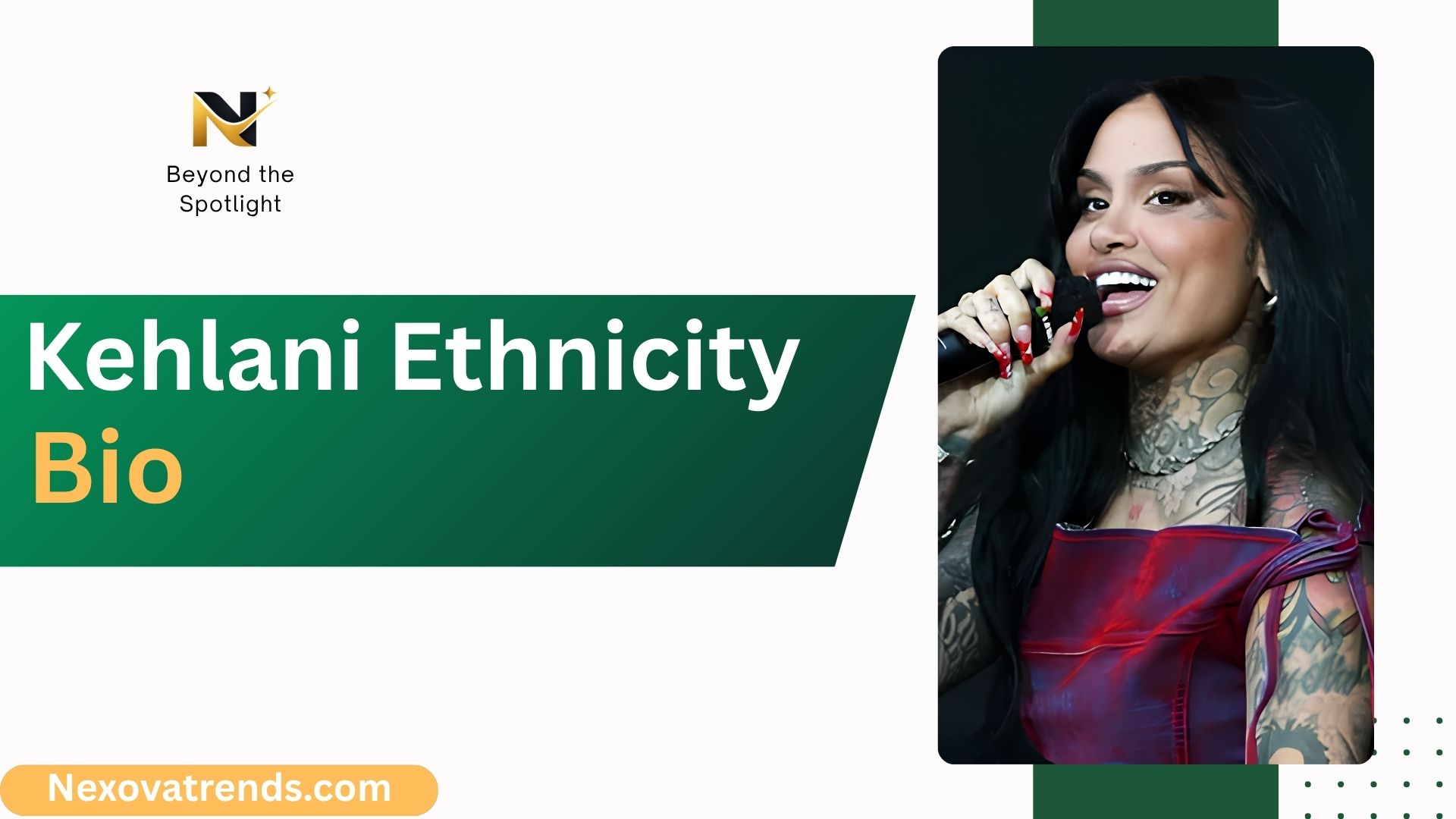
Kehlani Ethnicity
Kehlani Ashley Parrish, the Oakland-born R&B singer known mononymously as Kehlani, has described her own ethnicity across interviews as a mix of Black, white, Native American, and Hispanic/Spanish heritage, with smaller reported Filipino and Mexican ancestry.
Both of her parents were affected by drug addiction during her early childhood, and she was primarily raised by her aunt after her father’s death and her mother’s incarceration. This guide separates what Kehlani has actually said about her background from claims that remain unconfirmed or come from lower-quality celebrity-bio sites.
Quick Bio Information
| Full Name | Kehlani Ashley Parrish |
| Known As | Kehlani |
| Date of Birth | April 24, 1995 |
| Age (2026) | 31 |
| Birthplace | Oakland, California, USA |
| Nationality | American |
| Self-Described Ethnicity | Black, white, Native American (Blackfoot Cherokee), and Hispanic/Spanish, with reported Filipino and Mexican ancestry |
| Pronouns | She/they |
| Profession | Singer, songwriter, dancer, actress |
| Raised By | Her aunt, after her father’s death and her mother’s incarceration |
| Daughter | Adeya Nomi (born March 2019), with Javaughn Young-White |
| Known For | PopLyfe, America’s Got Talent (2011), SweetSexySavage, Blue Water Road |
A note on sourcing: Kehlani has discussed her ethnicity and family background across many interviews over the years rather than in one single definitive statement, so wording and emphasis shift from one source to another. Where outlets disagree or a claim cannot be traced back to Kehlani’s own words, that uncertainty is flagged rather than presented as settled fact.
What Is Kehlani’s Ethnicity?
Kehlani has never claimed a single racial identity. In a Hot 97 interview, she described her background as “Black, White, Native American and Spanish,” and in other conversations she has added Mexican into that same description.
She has also said her family includes some Filipino ancestry, tracing it to a grandmother, while noting that not everyone in her extended family agrees on how prominent that heritage is. Because she has repeated this general mix consistently over several years, it counts as her own account rather than outside speculation.
Kehlani’s Nationality And Ancestry
Kehlani is an American citizen, born and raised in Oakland, California, and she has never publicly claimed dual citizenship or ties to another country’s nationality. Her ancestry, by contrast, has been described piecemeal across interviews rather than in one documented family history.
She has specified her Native American ancestry as “Blackfoot Cherokee,” while also referencing Spanish and, at times, Mexican heritage elsewhere in her family tree. Since these details come from scattered interview comments rather than genealogical records, exact percentages or tribal enrollment are not things she has confirmed.
Kehlani’s Oakland Roots
Kehlani was born in a South Berkeley apartment and grew up in Oakland, California, a city she has repeatedly credited as central to her identity and sound. As a teenager she attended the Oakland School for the Arts, initially training in ballet and modern dance before shifting toward music after a knee injury.
Oakland’s Bay Area music scene, including her early work with the local group PopLyfe, shaped her style long before she signed with a major label. She continues to reference the city in interviews and lyrics as the place that built her resilience.
Who Are Kehlani’s Parents?
Kehlani’s parents were both affected by drug addiction during her early childhood, something she has spoken about openly in interviews and in her music. Her father passed away when she was a toddler, and her mother served time in jail during part of her upbringing.
Beyond those confirmed details, Kehlani has said little publicly about her parents as individuals, including full names or detailed family histories. Most specific claims about their exact ethnic backgrounds that circulate online trace back to her own broad interview statements rather than separate confirmation from her parents themselves.
What Happened To Kehlani’s Father?
According to Kehlani and multiple entertainment outlets, her father struggled with drug addiction and died when she was a toddler, leaving her without a paternal figure for most of her childhood. She has rarely gone into detail about the specific circumstances of his death in public.
Some celebrity-bio sites list a full name and detailed ancestry for her father, but these specifics are not independently confirmed by Kehlani or by a verified public record. The most accurate summary, based on what she has actually said, is that addiction played a central role in his early death.
Kehlani’s Mother And Childhood
Kehlani’s mother also struggled with substance abuse and was incarcerated for part of Kehlani’s early life, which is part of why Kehlani did not grow up primarily in her mother’s care. In interviews, Kehlani has described her mother’s heritage as including white, Spanish, and Native American ancestry.
Her childhood was shaped by instability tied to her parents’ addiction, something she has referenced in her songs and interviews rather than treated as a secret. She has generally spoken about her mother with compassion, framing addiction as an illness rather than a moral failing.
Who Raised Kehlani?
Kehlani was primarily raised by her aunt, who took her in after her father’s death and her mother’s incarceration and effectively became her guardian through her teenage years. Reports describe her aunt as having paused her own education to care for Kehlani during that period.
This part of her upbringing is well documented across interviews and profiles, making it one of the more reliably confirmed details of her early life. Kehlani has credited her aunt’s household with giving her the stability she needed to eventually pursue music.
How Kehlani’s Aunt Influenced Their Music
While living with her aunt, Kehlani was exposed almost exclusively to R&B and neo-soul music, particularly artists like Lauryn Hill, Erykah Badu, and Jill Scott. She has cited all three as major early influences on her songwriting and vocal style.
That musical environment shaped the emotional, conversational tone that still defines her work today, long before she had any formal industry training. Kehlani has described her aunt’s record collection as one of her first real music education.
Also Read This: Tesehki Age, Height, Net Worth, Career & Biography (2026 Updated)
PopLyfe And America’s Got Talent
At 14, Kehlani joined PopLyfe, a Bay Area teen pop cover band produced by former Tony! Toni! Toné! member D’Wayne Wiggins, serving as the group’s lead vocalist. The band auditioned for the sixth season of America’s Got Talent in 2011 and finished in fourth place.
Judge Piers Morgan famously told Kehlani during the show that she had “real talent” but didn’t need the group, and she left PopLyfe shortly after amid managerial and contractual disputes. The following stretch was difficult, including a period of homelessness in 2012 and 2013 before her solo career took shape.
Kehlani’s Solo Career
Kehlani’s solo career began with the SoundCloud release “ANTISUMMERLUV,” followed by the mixtapes Cloud 19 (2014) and You Should Be Here (2015), the latter earning a Grammy nomination for Best Urban Contemporary Album. She signed with Atlantic Records and released her debut studio album, SweetSexySavage, in 2017.
Her later albums, It Was Good Until It Wasn’t (2020) and Blue Water Road (2022), both charted in the upper half of the Billboard 200 and drew strong reviews. She has also appeared on screen, including in Suicide Squad, The Fate of the Furious, Creed III, and a guest role on The L Word: Generation Q.
Identity And Self-Expression
Kehlani first publicly identified as queer in a 2018 tweet, describing attraction across a range of genders rather than a fixed orientation. In April 2021, she came out as a lesbian in an Instagram Live and TikTok video, telling fans, “I finally know I’m a lesbian.”
She has said she wishes coming out felt more like an ongoing journey of self-discovery than one dramatic announcement. Her openness about sexuality, gender expression, and cultural background has become a consistent thread across her interviews and music.
Kehlani’s Pronouns
Kehlani uses she/they pronouns, a preference she confirmed publicly in a 2021 interview with Byrdie. She explained that while she doesn’t mind being called “she,” being referred to as “they” feels more personally affirming.
She has connected her gender expression to a sense of fluidity she has described feeling since childhood, separate from her sexual orientation as a lesbian. Both pronouns are used interchangeably by fans, media outlets, and Kehlani herself.
Kehlani’s Spiritual Life
Kehlani has spoken about practicing Santería, an Afro-Caribbean religion rooted in Yoruba and Catholic traditions, as part of her personal spiritual life. This became a matter of public record in 2024, when her ex-partner’s custody filing described her religious community in terms that media outlets characterized as a “cult.”
Both Kehlani and her ex publicly pushed back on that framing; he said he never used the phrase “sex cult” and hadn’t approved some of the filing’s language. Kehlani stated she did not “align with any of the allegations made against my former religious community,” a comment suggesting some distance from that community by the time she spoke out.
Kehlani As A Mother
Kehlani welcomed her daughter, Adeya Nomi, in March 2019 via an unmedicated home birth, with musician and then-partner Javaughn Young-White as the father. She has been open about experiencing postpartum depression after Adeya’s birth while remaining vocal about how central motherhood is to her life.
In 2024, Young-White filed for custody amid the allegations described above, a dispute that played out publicly before both parties issued statements disputing media coverage. Later reports indicate Kehlani was granted sole custody of Adeya, though the exact final legal terms have not been independently verified through court records.
Common Misconceptions About Kehlani’s Ethnicity
One common misconception is treating Kehlani as simply “Black” or “mixed Black and white,” which flattens the fuller mix of Native American, Spanish, and reported Filipino and Mexican ancestry she has described. Another is assuming her Native American heritage means formal tribal citizenship, when she has only ever referenced ancestry, not enrollment.
A third misconception grows out of her own evolving interview answers, where she has emphasized different parts of her heritage at different times. Reading her statements together, rather than isolating a single interview, gives the more accurate picture.
Understanding Kehlani’s Heritage
Taken as a whole, Kehlani’s heritage reflects several generations of mixing across Black, white, Native American, and Hispanic lines, filtered through a childhood defined more by upheaval than by any single cultural tradition. She has used her music as one of the main places she processes and represents that background.
Because so much of what’s known comes from her own scattered interview comments rather than documented family records, her heritage is best understood as self-described rather than formally verified in every detail. That distinction matters for anyone trying to separate her own words from secondhand claims online.
Final Thoughts
Kehlani’s ethnicity and heritage are genuinely mixed, drawn from Black, white, Native American, and Hispanic ancestry, with smaller reported Filipino and Mexican roots she has mentioned in interviews. Her early life, shaped by her parents’ addiction and her aunt’s care, adds important context to how she talks about identity today.
Where reporting is uncertain, such as her father’s exact background or the finer details of her spiritual community, this guide has tried to flag that uncertainty rather than present it as settled fact. What remains clear is that Kehlani has consistently spoken about her heritage in her own words across a music career now spanning more than a decade.
FAQs About Kehlani Ethnicity
What is Kehlani’s ethnicity?
Kehlani has described her own ethnicity as a mix of Black, white, Native American (Blackfoot Cherokee), and Hispanic/Spanish heritage, with reported smaller amounts of Filipino and Mexican ancestry.
Is Kehlani Filipino?
Kehlani has said she has some Filipino ancestry, reportedly through a grandmother, though she has noted this isn’t something her wider family universally confirms.
Is Kehlani Mexican?
She has referenced Mexican heritage in some interviews as part of her broader Hispanic ancestry, though it appears to be a smaller part of her overall background.
What is Kehlani’s nationality?
Kehlani is American, born and raised in Oakland, California.
Who raised Kehlani?
Kehlani was primarily raised by her aunt after her father died and her mother was incarcerated during part of her childhood.
What are Kehlani’s pronouns?
Kehlani uses she/they pronouns, a preference she confirmed in a 2021 interview with Byrdie.
Does Kehlani identify as Black?
Kehlani has said it’s more accurate to call her mixed rather than exclusively Black, clarifying in a 2020 statement that she doesn’t face the same experiences as women with two Black parents.
About the Author