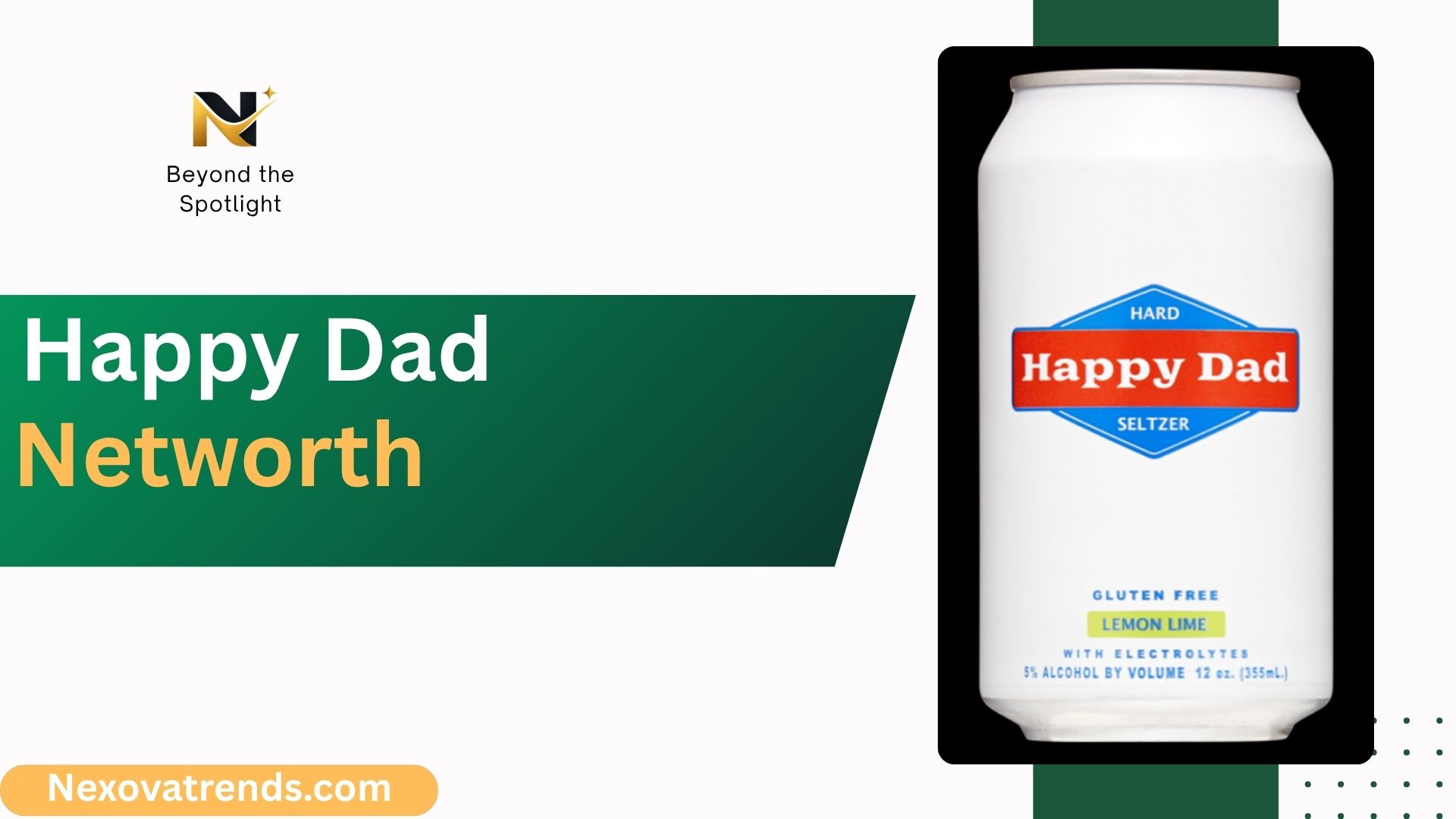
Happy Dad is commonly estimated to be worth $250 million to $300 million in 2026. That is a brand valuation guess, not a confirmed net worth, and no filing or funding announcement backs it.
The company is privately held and publishes no financials. Treat the range as an outside estimate that could sit higher or lower.
Happy Dad Quick Facts
| Brand | Happy Dad Hard Seltzer, Lemonade & Tea |
| Launched | 2021 |
| Founders (company materials) | Kyle Forgeard, John Shahidi, Sam Shahidi |
| CEO | Sam Shahidi |
| Category | Hard seltzer, hard tea, hard lemonade |
| Status | Private, venture-backed |
| Estimated valuation | 250M–300M (unconfirmed) |
| Sold in | United States and Canada |
What Is Happy Dad?
Happy Dad is an American hard seltzer brand launched in 2021 by NELK’s Kyle Forgeard and brothers John and Sam Shahidi. It sells beer-style 12 oz cans with low carbonation.
The lineup has grown from hard seltzer into hard tea and hard lemonade. The company calls itself one of the most-followed alcohol brands on social media.
Who Owns Happy Dad?
Happy Dad’s own materials list Kyle Forgeard, John Shahidi and Sam Shahidi as founders. Exact equity splits have never been disclosed.
Outside investors also hold minority stakes, according to PitchBook. Any precise ownership percentage you see online is unverified.
Is Happy Dad Owned by NELK?
Forgeard is a NELK co-founder and a Happy Dad co-founder, but public sources do not describe the brand as a NELK subsidiary. The tie runs through people, not a documented corporate structure.
The link mattered most at launch, when NELK’s audience gave the brand instant reach. How ownership is split remains undisclosed.
Happy Dad Net Worth in 2026
The $250–300 million range appears on dozens of content sites, yet none cites a filing, funding round or sale price. Many simply repeat one another, and some label a valuation as a net worth, which are not the same thing. A valuation prices the business, while a net worth belongs to a person.
A fair reading is an informal valuation guess built on sales momentum. Without disclosed financials, nobody outside the company can confirm it.
How Much Revenue Does Happy Dad Make?
Happy Dad does not report revenue. Third-party guesses run from roughly $67 million to $80–100 million for 2025, and none is verified. The gap between them shows how loose these numbers are.
Circana scan data points to strong growth, but that measures retail sales, not total revenue or profit. Bars, restaurants and Canadian sales sit outside those figures.
Happy Dad Sales Growth
Happy Dad’s news page, citing Circana, reports dollar sales up 35.1% year to date through March 22, 2026. Another report has it up 39.1%, the strongest trend among the top 25 beer vendors.
In Western U.S. convenience stores it ranked third in hard seltzer for the 12 weeks ending March 7, 2026, up 47% to $3.4 million. These figures are company-published.
How Happy Dad Became So Popular
Happy Dad grew by turning content into demand. Videos, podcasts and social posts built awareness before shelf space existed in many markets.
Retail followed, including eight new states in early 2024. The company says it holds the top SKU spot in Canada.
The NELK and Full Send Effect
NELK’s YouTube audience and the Full Send brand gave Happy Dad millions of potential buyers on day one. That cut the awareness spending most startups face.
The audience is also a dependency. Brand value tied to creators can shift if their reputation or attention does.
Happy Dad Business Model
Happy Dad earns money by selling cans through distributors to retailers, bars and restaurants. Profit depends on volume, pricing and distribution costs.
Partnerships and Full Send-adjacent branding widen reach, but beverage sales remain the core of the business.
What Makes Happy Dad Different?
The pitch is easy drinking: 12 oz beer-style cans, low carbonation and flavors aimed at everyday drinkers rather than wellness buyers.
Its bigger edge is marketing. Few beverage brands launch with a media audience already watching.
Happy Dad Product Line
Hard seltzer came first, in fruit flavors. The company has since added Hard Tea and Hard Lemonade.
Extra categories reduce reliance on seltzer, a category that has cooled since its peak.
Happy Dad and the Hard Seltzer Market
Hard seltzer boomed around 2019 to 2021, then slowed as drinkers moved toward other ready-to-drink options. Many brands have struggled since.
Happy Dad entered late and grew against that trend, which is why analysts call its momentum notable.
Happy Dad vs White Claw
White Claw, from Mark Anthony Brands, is far larger. In the Western convenience data it still ranked ahead of Happy Dad, but grew just 4.5%.
Happy Dad competes on personality and growth speed, not scale. It is a challenger, not yet a peer, and its future depends on holding shelf space against much bigger rivals.
Happy Dad vs Truly
Truly belongs to Boston Beer Company. In the same Western convenience data it fell 8.6% while Happy Dad rose 47%.
One regional snapshot does not settle the rivalry. Truly still has corporate backing and broader distribution.
Also Read This: Don Toliver Height, Age, Net Worth, Career, Biography & Personal Life (2026)
Is Happy Dad a Successful Company?
By growth and reach, yes. A 2021 launch, national retail presence and top-25 beer vendor growth rankings are real achievements.
Sales success is not proof of profit. Because Happy Dad is private, its profitability is unknown.
How Much Is the Happy Dad Brand Worth?
Outside estimates cluster around $250–300 million, but brand value depends on more than sales: distribution, loyalty, investor terms and debt.
Funding rounds would normally set a real price. Happy Dad’s rounds, per PitchBook, list no public amounts.
Is Happy Dad Worth $300 Million?
Possibly, but it is not confirmed. Three hundred million is the top of the estimate range, not a disclosed valuation.
Treat it as a plausible headline number until the company or an investor states a price.
Who Is Sam Shahidi?
Sam Shahidi, born in 1983, is Happy Dad’s CEO. He co-founded Shots Podcast Network and joined the Full Send orbit in 2020, per his Wikipedia profile.
He runs strategy and daily operations, and helped launch the brand in 2021 alongside his brother and NELK.
Who Is John Shahidi?
John Shahidi is Sam’s brother and a Happy Dad co-founder, reportedly serving as President. He is a media entrepreneur with a digital talent and content background.
Reports credit him with major partnerships, including the Joe Rogan Experience sponsorship announced in September 2025.
Who Is Kyle Forgeard?
Kyle Forgeard is a NELK co-founder and the most visible face tied to Happy Dad. NELK is known for prank and lifestyle YouTube content and the Full Send brand.
His audience gave the brand its early reach, though his personal stake is not disclosed.
Does SteveWillDoIt Own Happy Dad?
Steve Deleonardis, known as SteveWillDoIt, is a NELK member. Some content sites list him as a Happy Dad owner.
Happy Dad’s official materials name only three founders, so his stake is unconfirmed.
Did NELK Sell Happy Dad?
No public report shows NELK or the founders sold Happy Dad. The founders remain publicly tied to it.
Minority investment is not a sale. The company has taken outside money without any reported buyout.
Happy Dad Investors
PitchBook lists 11 investors and three early-stage venture rounds, in January 2023, March 2024 and March 2025. Named backers include Anti Fund, Humble Growth and Lakeside Capital.
All are listed as minority holders, and round sizes are not disclosed. PitchBook also lists roughly 188 employees, which suggests a company well beyond startup size.
Happy Dad Marketing Strategy
Happy Dad markets like a media company. The brand appears inside podcasts, videos, events and limited drops rather than only in traditional ads.
That makes promotion feel native to fans and can lower the cost of reaching them.
Social Media and Viral Growth
Short clips, product drops, giveaways and event content keep Happy Dad in feeds. Its audience is a core asset.
Attention turns into sales only when stores stock the product, which is why distribution matters as much as views.
Happy Dad Partnerships
The biggest reported deal is the exclusive hard seltzer sponsorship of The Joe Rogan Experience, announced September 25, 2025.
It takes the brand beyond the NELK crowd. Happy Dad also announced an on-premise data partnership with BeerBoard in April 2026, aimed at bar and restaurant growth.
Where Is Happy Dad Sold?
Happy Dad sells across much of the United States and in Canada, through grocery, convenience and liquor stores, plus bars and restaurants.
Availability varies by state alcohol law and distributor. The official store locator is the best way to check nearby stock.
Why Distribution Matters for Happy Dad Net Worth
Beverage value follows shelf space. More doors mean more volume and stronger leverage with distributors and investors.
The reverse also holds: expansion is costly, and thin margins can erode the gains that raise valuation.
What Could Increase Happy Dad Net Worth?
More retail doors, on-premise placements, Canadian growth and new product lines could lift value. Sustained profitability would matter most.
A priced funding round or acquisition offer would replace guesswork with a real number.
Risks That Could Affect Happy Dad’s Value
Hard seltzer stays competitive, tastes shift quickly, and distribution expansion needs capital. Alcohol regulation adds compliance costs.
Creator-led branding carries reputation risk, since controversy around founders or partners can spill onto the product.
Happy Dad Net Worth Growth Potential
Momentum looks real: retail data shows growth while other seltzers slow, and hard tea and lemonade broaden the runway.
Growth from a small base can fade at scale, and category-wide seltzer declines could still pull it back. Future value rests on repeat purchase, not hype.
Is Happy Dad a Billion-Dollar Brand?
No evidence supports a $1 billion valuation. The most repeated estimate is a fraction of that.
Reaching it would take far larger revenue, proven profit and likely a major investment or acquisition.
Happy Dad Net Worth Compared With Other Seltzer Brands
White Claw and Truly belong to larger companies, so their values are not reported separately. Direct net worth comparisons are unreliable.
Sales momentum is the fairer yardstick, shown below for Western U.S. convenience stores (12 weeks to March 7, 2026).
| Brand · Owner | Dollar sales change |
| Happy Dad · Private | +47% |
| White Claw · Mark Anthony Brands | +4.5% |
| Truly · Boston Beer Company | −8.6% |
Frequently Asked Questions
What is Happy Dad net worth in 2026?
Estimates put its value at $250–300 million, but no official figure exists because the company is private.
Who owns Happy Dad?
Kyle Forgeard, John Shahidi and Sam Shahidi are the named founders. Ownership percentages are not public.
Who is the CEO of Happy Dad?
Sam Shahidi is CEO. John Shahidi is reportedly President.
When was Happy Dad founded?
It launched in 2021.
Is Happy Dad owned by NELK?
It is closely tied to NELK through Kyle Forgeard, but is not documented as a NELK subsidiary.
Does SteveWillDoIt own Happy Dad?
Unconfirmed. Company materials name three founders, not him.
Is Happy Dad profitable?
Unknown. The company does not publish profit figures.
Where is Happy Dad sold?
Across much of the United States and in Canada, depending on local laws and distributors.
Final Thoughts
Happy Dad‘s estimated $250–300 million value is plausible but unverified. It is a private company, so revenue, profit and ownership splits stay undisclosed.
What is documented is fast retail growth, a creator-built audience and a high-profile Joe Rogan sponsorship. Until a funding round or sale sets a price, treat every figure as an estimate, including the ones in this guide.
About the Author



1 thought on “Happy Dad Net Worth 2026: How Much Is the Company Worth?”